
Nesting season in the garden: how to avoid disturbing active nests
Calendar dates are only an alert. Look for real breeding activity before garden work and leave an active nest and its surroundings undisturbed.
Nesting season is not one fixed period during which every garden task is automatically prohibited. In the Netherlands, the key issue is the protection of native birds, nests in use and eggs. Mid-March to mid-July is often used as a warning period, yet birds can breed earlier or later. The presence of an active nest and the risk created by the work are what matter.
Laws differ by country. This is general editorial guidance, not advice on a specific legal case. Check the current rules where you live and seek qualified help before work that could affect a nest.
Observe before starting work
Watch from a distance without searching through shrubs, ivy or nest entrances. Repeated trips carrying nest material or food, alarm behaviour, and a consistent route into cover can all justify stopping for a closer expert assessment. A brief quiet period does not prove that no nest is present.
| Situation | Sensible next step |
|---|---|
| No activity seen, but vegetation is dense and work can wait | Postpone or arrange a competent check. |
| Birds repeatedly approach one concealed point | Stop preparing the work and observe from a distance. |
| An active nest or dependent young is present | Leave the nest and surrounding area alone; postpone disturbance. |
| Work affects a building, roof or facade | Check protected nest sites and any permission requirements. |
| There is an urgent safety problem | Ask the responsible authority or an ecologist for site-specific advice. |
Pruning, clearing and mowing
The date alone does not decide whether pruning is appropriate. Work must not damage or disturb a protected nest. Nests are difficult to find, so postponing work in dense vegetation is often the most controllable option. Do not remove ivy, brush piles or cover after one quick inspection.
Delay noisy or prolonged activity immediately around an active nest. Young birds may remain close to their parents after leaving the nest and should not be moved simply because they are sitting low down. Contact a local wildlife rescue service if a bird is clearly injured and follow its instructions.
Prepare a nest box before it is occupied
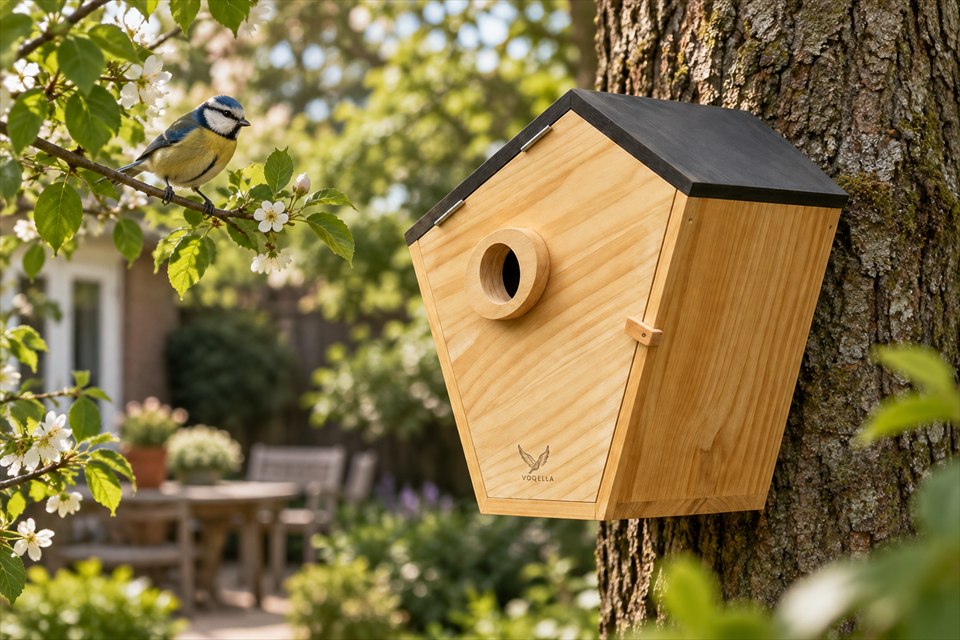
Choose and position a box well before use. Plan any cable, power source and viewing angle in advance. Once birds occupy it, do not open, move or adjust the box simply to improve the view. See the full guide to nest-box placement and quiet observation.
A camera does not make observation disturbance-free. Limit activity around the box and respond to changes in behaviour. The guide to responsible garden birdwatching explains when to step back.
Use the seasons to plan work
Autumn and winter
Schedule non-urgent pruning outside active nesting, while still checking locally protected nest sites. Clean an unused box only in line with current species and box guidance. Plan future observation without a deadline.
Early spring
Finish suitable installation and major changes before clear signs of occupation. Avoid repeated visits to a possible nest simply to confirm activity.
Spring and summer
Treat dense vegetation, buildings and boxes as potentially active. Reduce disturbance, postpone work when signs appear and decide from the real situation rather than the date alone.
When somebody else does the work
Tell a gardener, landlord or contractor where you have observed bird activity before work begins. Mark areas that should not be entered or altered and agree who decides what happens if a nest is found. A simple map, a distant reference photograph and a clear stop instruction are more useful than a vague request to “watch out for birds”.
If a nest or breeding bird appears during the work, stop in that area. Do not move it, improvise a barrier or test how closely you can approach. Step back and ask the responsible authority or a competent ecologist for the current next step. Keep children and pets away as well.
One observation of an apparently empty nest is not enough to resume immediately. Check advice for the species and situation; some nest sites receive protection beyond an active breeding attempt.
A commercial route belongs before the nest is active
There should be no sales prompt around an active nest. Someone planning a future box can read the placement guide and then use the Voqella comparison guide. A nest box with camera is one possible future format; installation and use remain subject to current wildlife guidance and approved model instructions.
Sources
- Vogelbescherming Nederland, current Dutch legal FAQ and pruning guidance.
- RSPB or the responsible national body for rules in the reader’s country.
- Local wildlife rescue guidance for injured birds.