
No birds at the feeder? Work through this checklist
An empty feeder rarely has one obvious explanation. Check visibility, cover, disturbance, food and hygiene without promising visits.
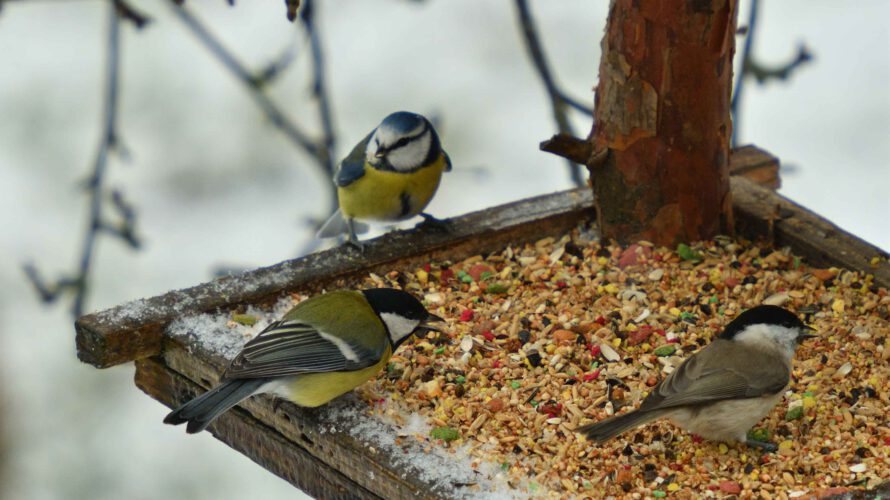
A new feeder may receive little visible activity for days or longer. That does not identify a cause. Birds choose their own feeding sites, and natural food, cover, disturbance, season and unfamiliarity can all be involved. Check the setting in a consistent order and change one factor at a time.
Observe before moving anything
Watch for ten minutes at two or three regular times across several days. Record birds in the whole garden or street, not only at the feeder. Are birds using nearby trees while avoiding the feeder, or is there little bird activity anywhere? The answer tells you whether to inspect the feeding point or the wider habitat first.
Use the guide to responsible garden birdwatching for comparable notes. A camera can reveal additional moments but cannot establish why a bird stays away.
Check the site
- Approach: is there space to land and leave?
- View and cover: can a bird scan for danger and reach nearby shelter without a hidden cat immediately beside the food?
- Disturbance: do people or pets repeatedly pass close by?
- Weather: does food become wet or the feeder swing sharply?
- Glass: does the approach cross reflective or transparent glazing?
- Access: can you remove residue and clean the feeder as instructed?
Move the site only after this review. Daily changes make observations difficult to compare.
Check food and hygiene
Use food that fits current guidance where you live and store it dry. Offer a modest quantity. Discard wet, mouldy, rancid-smelling or clumped food. Do not keep topping new food onto old residue.
Remove droppings and spills, clean with separate outdoor tools and wash your hands. If sick or dead birds appear, follow current reporting and pause advice rather than adding more food. The complete foundation is in responsible garden-bird feeding.
Look beyond the feeder
A garden containing only a feeder may offer little natural food or shelter. Plants, insects, seeds, berries, water and quiet zones form the wider setting. The guide to a bird-friendly garden explains how to add useful structure. These changes improve the habitat; birds still decide whether to visit.
Name species only when the features are clear. The guide to common Dutch garden birds supports identification without turning a single sighting into a trend.
Change one variable and review again
| Week | Action | Record |
|---|---|---|
| 1 | Make no change; use fixed observation times | Local activity, weather, disturbance |
| 2 | Correct one clear problem, such as damp food | Same observation times and care routine |
| 3 | Reposition only if the evidence supports it | Keep old and new locations distinct |
| 4 | Decide whether the routine is sustainable | Cleaning, leftovers, nuisance and sightings |
Stop if the site cannot be kept clean, secure and free from unreasonable nuisance. More food does not solve an unsuitable position.
What might the pattern help you ask?
| Observation | A next question, not a diagnosis |
|---|---|
| Birds use nearby shrubs but do not land | Is the approach clear and the feeder quiet enough? |
| Only spilled food disappears | Which bird or other animal is using it, and can spillage be reduced? |
| Activity stops after rain | Has the food become damp or does the feeder retain moisture? |
| The site is empty only while you sit close by | Could you observe from a fixed position farther away? |
| Little activity is visible anywhere nearby | What natural food and shelter exist in the surrounding area? |
Use the table to select one question you can test. It is not a list of certain causes: the same observation can mean something different in two gardens. Avoid a large purchase or major habitat change based on one quiet period.
Would another format fit better?
A classic feeder, a combined food-and-water station and a window model require different space and care. Use the Voqella comparison guide if the form itself is a poor match. You can then consider a classic feeder with camera or a food-and-water station with camera, but a camera does not cause visits or make them certain.
Sources
- Vogelbescherming Nederland, current seasonal feeding and hygiene guidance.
- RSPB, current bird-feeding and disease-risk guidance for UK readers.
- Local bird-protection authorities for current national advice.