Bird baths: a practical routine for fresh water and a clean bowl
A shallow bird bath needs a simple routine. Choose a safe site, replace the water often and respond promptly to dirt or signs of disease.
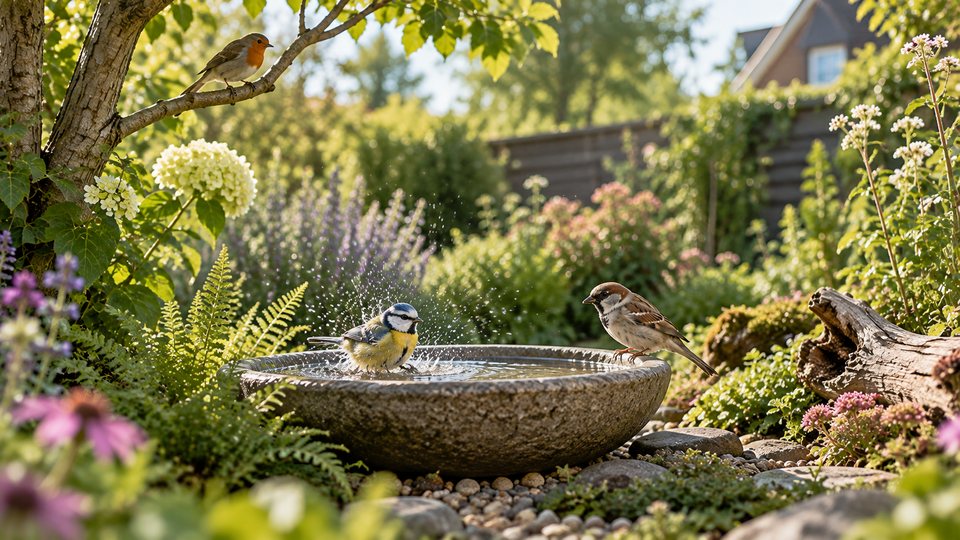
A bird bath is a shallow, accessible place where birds can drink and bathe. It does not need to be elaborate. What matters is a sensible location and maintenance you can sustain. Do more than top it up: inspect the remaining water, remove debris and replace it.
Choose a site you can inspect every day
Set the bowl on a stable, roughly level surface. Birds need a view of the surrounding area and an escape route nearby, but avoid dense cover where a cat could wait immediately beside the bath. On a balcony, also consider wind, stability and water dripping onto another home.
Dutch guidance recommends shallow water that resembles a puddle rather than a deep container. A gently accessible edge or flat stone may provide footing. The right arrangement still depends on the bowl and the location, so consult current national guidance before use.
Use a short, repeatable routine
At each check
- Look for droppings, leaves, seeds, algae or a dead animal in or beside the water.
- Empty dirty water away from areas used to prepare food or drinking water.
- Remove visible residue with tools reserved for outdoor wildlife equipment.
- Rinse the bowl and refill it with fresh, clean water.
- Wash your hands afterwards.
Water may evaporate or become dirty faster in hot conditions, so inspect it more often. Replacing all the water regularly also prevents it from remaining stagnant for long periods. Adding clean water to a dirty bowl does not remove accumulated residue.
Periodic cleaning
Clean rims, grooves and rough surfaces where deposits remain. Follow the care instructions for the material: a method that suits stone, ceramic or plastic may not suit a pump or coated surface. Rinse thoroughly and leave no cleaning product in drinking water. Keep separate outdoor gloves and brushes, stored away from children and pets.
If sick or dead birds appear
A single quiet bird is not enough to make a diagnosis. Clear symptoms, several sick birds or deaths around feeding and drinking sites call for a pause and current expert advice. National wildlife-health bodies publish reporting and hygiene instructions, which may supersede an everyday routine during a local incident.
Do not handle a sick or dead wild bird with bare hands. Follow the reporting advice for your country and remove feeding or drinking equipment temporarily if the responsible authority tells you to. Resume only in line with that guidance.
Check food and water separately
A combined feeding and water station may be convenient to observe, but food debris should not remain in the water. Inspect each zone separately. Read the guide to responsible garden-bird feeding before combining them. The guide to balcony birdwatching adds questions for small outdoor spaces.
If you want to view food and water from one position, start with the Voqella comparison guide. A combined food-and-water station with camera is one possible format; this care article makes no statement about that product’s technical features or performance.
Choose for maintenance, not appearance alone
A practical bowl can be lifted, emptied and reached from every side. Before buying or placing one, check whether grooves, porous surfaces and removable parts can be cleaned as the maker instructs. Persistent deposits, a slippery surface or an unusual smell are reasons to reassess the bowl and consult current cleaning guidance.
Do not try to correct a deep container simply by adding more water. Choose a form with a shallow, accessible area and stable edge. If the bowl tilts, rocks or traps dirt in one corner, correct the setup before use. Do not add salt, antifreeze, fragrance, oil or an improvised household treatment to water intended for wild birds.
Keep a simple care note
Record when you changed the water, what you found and whether activity seemed unusual. This can reveal maintenance patterns without assigning every change to the product or to bird behaviour. The goal is a clean, manageable water source; visits cannot be promised.
Sources
- Vogelbescherming Nederland, guidance on water during hot weather.
- Sovon, hygiene and reporting advice for disease around feeding and drinking sites.
- RSPB and relevant national authorities for current local guidance.