
Birds on a balcony: plants, water, food and quiet observation
Even a small balcony can be a useful place to watch birds. Start with loading, wind and neighbours, then build a routine you can maintain.
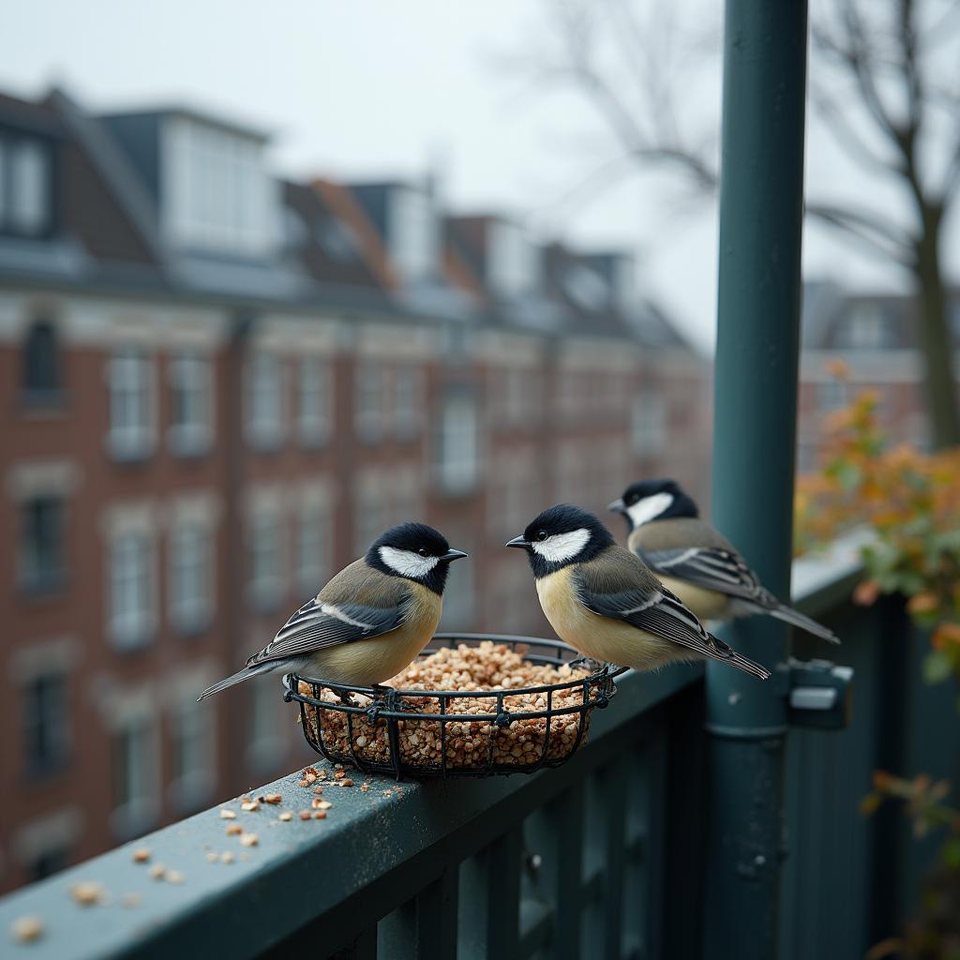
You do not need a large garden to watch birds. A balcony can provide a view of species already moving through the neighbourhood. Start with the limits of the space: loading, wind, drainage, safe access and the possibility of food or water reaching another home. A small setup is easier to assess and maintain.
Read the space before adding anything
Look at the balcony at different times of day. Note sun, shade, wind and existing flight paths. Inspect reflections in windows and glass balustrades. If glass reflects sky or vegetation or appears to offer a clear route, follow current bird-protection guidance for making the outside surface visible.
Check your lease, building rules and the effect on neighbours before feeding birds or setting out water. Seed, droppings and runoff should not land on the balcony below. Use stable items that you can reach without leaning over the railing.
Build the balcony in three stages
1. Plants and structure
Choose plants for the actual light, wind, space and safe load. Heavy, stable planters may cope better than small loose pots. A climber, compact shrub or group of containers can add structure, but avoid creating a concealed cat approach immediately beside food or water. The wider guide to a bird-friendly garden or balcony covers natural food and shelter.
2. A shallow dish of water
Use a stable, shallow bowl that is easy to empty and clean. Replace the water rather than merely topping it up. Hot weather, algae or heavy use may require more frequent checks. Follow the complete bird-bath care routine.
3. Modest supplementary feeding, if suitable
Decide only then whether feeding is manageable in your setting. Offer a small quantity that will not sit for days, clear spilled food and store supplies dry. Disease guidance changes, so consult current advice for your country and read the basics of responsible garden-bird feeding.
Create an observation routine
Choose a regular seat indoors or at a distance. For ten minutes, record birds using the balcony, railing or airspace. Include sessions with no visitors so dramatic sightings do not distort your picture.
Change one thing at a time and allow time before judging it. Visits depend on the wider environment, season, local food and disturbance; no plant, bowl or feeder makes them certain. The guide to responsible birdwatching explains how to keep calm, comparable notes.
Would a window feeder suit the space?
A window model may fit if the product instructions allow the fixing surface, the glass has been assessed and you can clean the feeder safely. It is a poor match when the pane is inaccessible, hazardous reflections cannot be addressed or falling debris would cause a nuisance. Start with the guide to choosing and using a window bird feeder.
If that check succeeds, use the Voqella comparison guide to compare formats. A product cannot correct an unsuitable location.
Monthly balcony check
- Are planters, water and any feeder still secure?
- Can rainwater drain without causing a problem?
- Have food debris and droppings been removed?
- Is hazardous glass sufficiently visible to birds?
- Is there an active nest nearby? Use the guide to nesting season in the garden, delay disturbance and follow current local rules.
- Can you still maintain the routine consistently?
A calm first week
On day one, clean the space and record sunlight, wind and the bird activity already present. Add one stable item, such as a plant or an empty water dish, and see how it behaves in changing weather. Add water or food only when emptying and cleaning prove practical. Then use a few regular observation periods without repeatedly stepping outside.
At the end of the week, assess more than visits. Check spillage, moisture, noise, stability and the effect on neighbours. If the routine causes a nuisance or is difficult to maintain, simplify it. A small, clean and accessible setup is more useful than a crowded balcony whose equipment receives too little care.
Sources
- Vogelbescherming Nederland, current balcony, water, feeding and window guidance.
- RSPB, current feeding guidance for UK readers.
- Relevant tenancy/building rules for the reader’s own property.