
How to choose and use a window bird feeder
A window feeder brings the feeding spot closer. Check the glass, fixing, cleaning access and current feeding guidance first.
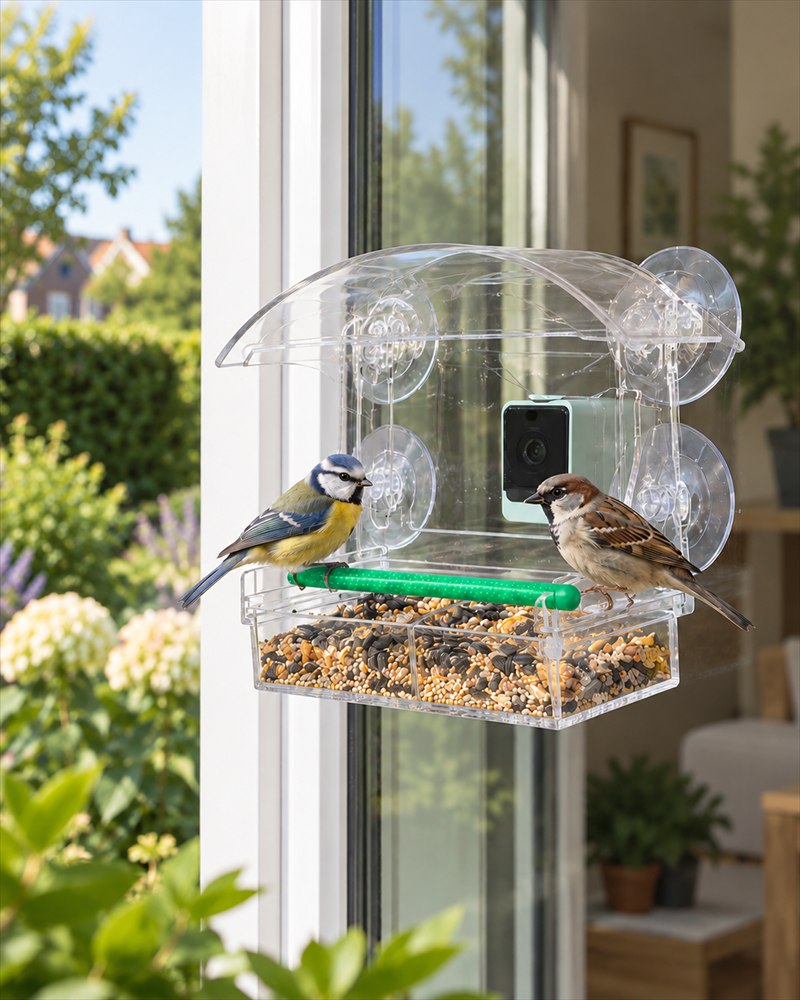
A window bird feeder sits on or immediately beside a pane of glass, bringing the feeding area into view from indoors. It can suit a flat, balcony or kitchen window where outdoor space is limited. That proximity also creates a practical checklist: the feeder needs to be fitted exactly as instructed, remain easy to clean, and be considered alongside any risk posed by reflective or transparent glass.
Check the window before choosing the view
| Check | Why it matters |
|---|---|
| The glass and fixing area are clean and sound | Dirt, loose sealant or an uneven surface may interfere with the fixing. |
| You can reach the feeder safely | Removing food and cleaning are routine jobs. |
| The site avoids prolonged, intense sun | Food may deteriorate faster and strong backlight can spoil the view. |
| Water can drain and food cannot sit in wet corners | Damp or clumped food should be removed. |
| You have checked reflections and sightlines through the building | Birds may mistake reflected sky, trees or clear glass for open space. |
| A camera would cover only your intended private area | Avoid unnecessarily including neighbours, visitors or public space; use the bird-camera privacy check. |
Follow the instructions for the exact model. A general guide cannot establish which glass, surface or fixing method is approved for a particular product.
Make risky glass visible
Inspect the pane from outside in daylight. Does it reflect vegetation or open sky? Do two windows create the appearance of a clear flight path? If so, follow current bird-protection guidance for treating the outside of the glass. Effective patterns generally need coverage across the hazardous area; a single decorative silhouette is not a complete answer.
Do not assume the feeder itself removes the risk. Watch for collisions or near misses after installation and respond if they occur. The guide to responsible garden birdwatching explains how to record behaviour without jumping to conclusions.
Offer modest amounts and keep the site clean
Because the feeder is close to your living space, spilled food, droppings and damp residue are easy to spot. Treat that visibility as useful feedback. Offer only an amount you can monitor, remove wet or spoiled food, and clean the feeder as its care instructions require. Wash your hands afterwards.
Feeding guidance can change as evidence about wildlife disease develops, and national advice may differ. The RSPB currently takes a stricter position on flat feeding surfaces, including window feeders, than the Dutch guidance reviewed for this package. Check the latest advice from the bird-protection body in your country before use. If several birds appear sick or dead, stop improvising and follow current reporting and hygiene guidance.
For food choices and a manageable routine, start with responsible garden-bird feeding.
Give birds time and space
Birds decide whether and when to use a new site. Avoid repeatedly approaching the pane or changing the feeder, food and surroundings all at once. Observe at short, regular times and record only what you see: time, weather, behaviour and a species name only when you are confident.
An empty feeder does not prove that the design has failed. Local food, cover, disturbance, season and time to adjust may all play a part. Work through the empty-feeder checklist before making a major change.
Window feeder or garden feeder?
A window feeder may fit when close viewing and limited space matter, provided that you can maintain it easily. A hanging or freestanding site may suit you better when you need more distance from glass, want to test several positions, or cannot clean safely at the window. On a balcony, wind, neighbours and falling debris also matter; see the guide to watching birds from a balcony.
Use the Voqella comparison guide to compare formats. Only then consider the window bird feeder with camera as one possible form. Images and general copy do not establish a fixing requirement, camera capability or box contents; confirm any deciding detail for the exact version.
Final check before fitting
- Read the complete fitting and care instructions for the exact version.
- Confirm that you can remove, empty and refit it without taking a risk.
- View the pane from inside and outside in daylight and note reflections.
- Decide how you will dispose of damp food and cleaning water.
- Save a neutral reference view so that a shifted mount is easier to notice.
Check again after the first day to see whether the fixing remains as instructed and whether rain, sun or use has altered the setup. Stop if you are uncertain about fitting or safety and ask for model-specific help; do not improvise an extra fixing that the instructions do not cover.
Sources
- Vogelbescherming Nederland, guidance on window collisions and hygienic feeding (2025).
- RSPB, “All about bird feeding” (current guidance accessed 2026-09-10).
- NABU, “Vogelfalle Glas” (German glass guidance, 2025 edition).